

Blog
Stag Party Planning for Beginners: A Step-by-Step Guide
Indice dei contenuti
- Stag Party Planning for Beginners: Where to Start
- How Long Should a Stag Do Last: Planning Your Timeline
- Setting a Budget and Creating a Stag Party Planning Checklist
- How to Collect Money for a Stag Do: Payment Methods and Tracking
- Stag Do Itinerary Template: Building Your Event Schedule
- Managing Group Expenses and Handling Dropouts
- Fundraising and Revenue Ideas for Stag and Doe Events
- Common Mistakes Beginners Make When Planning a Stag Party
Stag Party Planning for Beginners: A Step-by-Step Guide
Last Updated: July 4, 2026
Quick answer
Stag Party Planning for Beginners: A Step-by-Step Guide in short: activities from 35€ per person, groups from 8 people, and a full weekend planned for you with one contact, one itinerary and one invoice. Send your dates and group size and we come back with availability and a group price.
Stag Party Planning for Beginners: Where to Start
Organizing a stag party requires coordinating accommodation, activities, attendee communication, and finances. Starting with a solid foundation, clear roles, realistic expectations, and the groom’s actual preferences, makes the process manageable.
The groom’s preferences should drive every decision. Before committing to a destination or budget, understand what he actually wants: adventure or relaxation? Large group or intimate gathering? These answers shape venue selection, activities, and costs.
Your role as organizer comes with real responsibility: managing expectations, collecting money, coordinating logistics, and solving problems. This doesn’t mean doing everything yourself, but being organized enough that others trust you with their time and money.
Understanding Your Role as Best Man or Organizer
The best man or primary organizer becomes the project manager: tracking RSVPs, collecting deposits, answering questions, and making decisions when conflicts arise. Set boundaries early by establishing clear policies about deadlines and consequences in writing rather than improvising when issues arise.
Setting Expectations with the Groom
Talk to the groom privately before sending invites. Ask direct questions: What’s your budget? How many people? What destination? How many days off work? Share his preferences with the group clearly and establish what’s optional versus mandatory.
How Long Should a Stag Do Last: Planning Your Timeline
Most stag parties run 2-4 days, with Friday-Sunday weekends being standard. Start planning 8-12 weeks before the event to secure reasonable accommodation prices and group activity rates. Starting 4 weeks out is manageable but limits options.
Weekend vs. Multi-Day Events
A weekend stag (Friday evening through Sunday afternoon) works well because people take one day off work. A three-day event (Friday-Sunday) provides breathing room for day activities and proper Saturday night celebration while allowing Monday return to work. This is the sweet spot for most groups. Four-day events require Thursday off, limiting attendance and increasing costs.
Booking Deadlines and Planning Windows
Set a hard RSVP deadline 6-8 weeks before the event. Book accommodation immediately after confirming numbers. Book activities 4-6 weeks out for better rates and availability. Collect deposits (£100-150 per person) within 2 weeks of sending invites and set a final payment deadline 2-3 weeks before the event.
Create a shared document (Google Sheet or Trello) showing key deadlines: RSVP, deposit, final payment, activity booking, and check-in time. Share with all attendees so everyone knows expectations.
Setting a Budget and Creating a Stag Party Planning Checklist
Budget disagreements are the most common source of conflict. The groom’s preferences should inform the budget, not the other way around.
Breaking Down Costs: Accommodation, Activities, and Meals
Accommodation typically represents 40-50% of total budget. UK city weekends: £30-50 per person per night. Barcelona or Ibiza: add 30-50% to those prices.
Activities represent 20-30% of budget. Single activities (brewery tour, go-kart racing) cost £30-60 per person. Premium experiences (jet skiing, private chef) run £80-150+ per person.
Meals and drinks represent 20-30% of budget. Budget £15-20 for lunch, £25-40 for dinner. Travel costs vary: local events cost nothing, UK city trips £20-50 per person, international destinations £100-200+ per person for flights.
Building Your Planning Checklist
| Task | Deadline | Owner | Status |
|---|---|---|---|
| Get groom input on preferences | Week 1 | Best Man | Completo |
| Send invites and RSVP request | Week 2 | Best Man | Completo |
| Confirm final headcount | Week 6 | Best Man | Completo |
| Book accommodation | Week 8 | Best Man | Completo |
| Collect deposits from attendees | Week 6 | Best Man | Completo |
| Book activities | Week 6 | Best Man | Completo |
| Arrange transport (flights/coach) | Week 7 | Best Man | Completo |
| Plan itinerary and send schedule | Week 4 | Best Man | Completo |
| Collect final payments | Week 3 | Best Man | Completo |
| Confirm all bookings 1 week prior | Week 1 | Best Man | Completo |
| Share final details and packing list | Week 1 | Best Man | Completo |
Track accommodation and activity deposits separately in a spreadsheet: who paid, when, how much, and for what.
How to Collect Money for a Stag Do: Payment Methods and Tracking
Collecting money from a group creates friction if not handled properly. Use tools that make payment easy while giving you complete visibility into who’s paid.
Money Collection Apps: Splitwise, Revolut, Monzo, and Alternatives
Splitwise is the most popular choice. Create a shared expense group, add attendees, log expenses as they occur, and the app calculates who owes what. It handles uneven splits and sends reminders. The free version works for most groups.
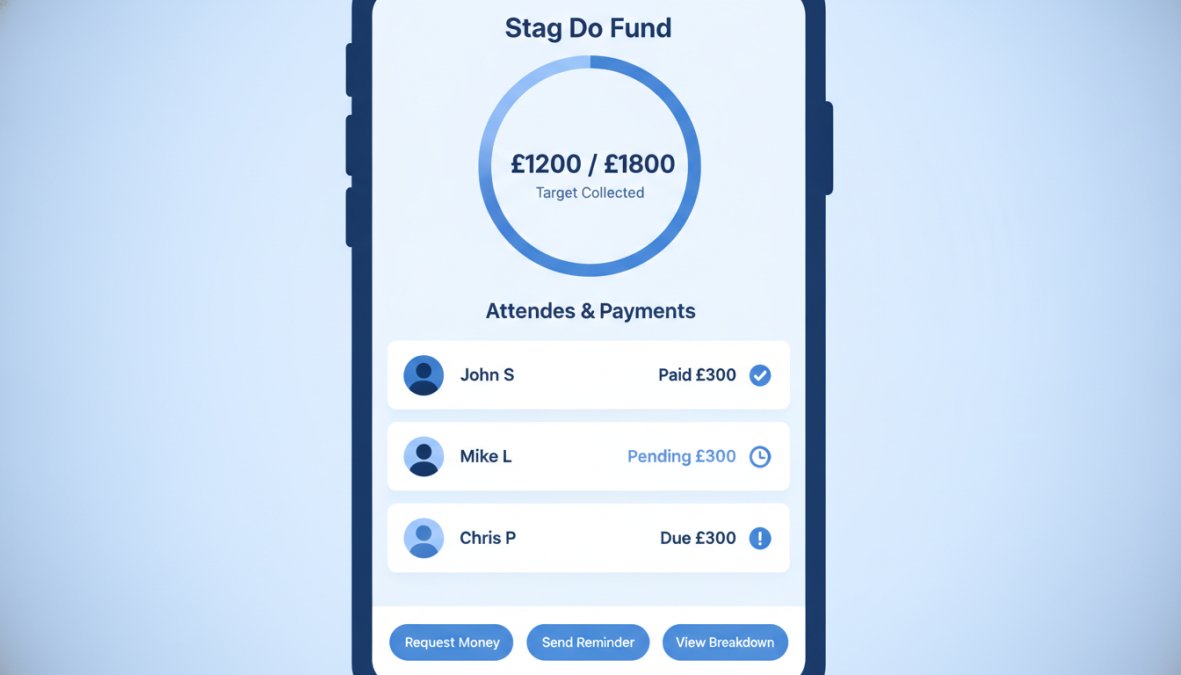
Revolut e Monzo offer group payment features where people contribute upfront and you pay vendors directly. Leetchi e Collctiv are designed for group events and handle deposits, final payments, and automatic reminders, though they charge small fees (1-2%).
A shared Google Sheet with columns for name, deposit due, deposit paid, final balance due, and final payment works for simple situations. Splitwise is recommended for most groups, it’s free, handles complex splits, and sends automatic reminders.
Managing Deposits and Handling Late Payments
Set a clear deposit amount (25-30% of estimated total). For a £600 budget, collect £150-180 deposits. Set a specific deadline: "Wednesday by 5pm," not "sometime next week." Follow up within 24 hours if someone misses it.
Collect final payments 2-3 weeks before the event. If someone can’t pay the full amount, discuss alternatives: partial payment, skipping certain activities, or dropping out. Never cover someone’s full cost expecting repayment.
Set clear expectations upfront: everyone pays their share, or they don’t attend.
Financial Transparency and Real-Time Updates
Share payment status weekly, especially as the event approaches. Use a shared document where everyone can see the running total. This creates accountability and reduces disputes. For expenses during the event, track them in real-time using Splitwise and settle all accounts before everyone leaves for home.
Stag Do Itinerary Template: Building Your Event Schedule
A solid itinerary balances structured activities with free time, prevents decision fatigue, and ensures clarity.
Sample Itinerary Structure
Friday Evening:
- Arrive at accommodation (check-in time, parking info, key collection)
- Group dinner (7-8pm start, restaurant name and confirmation)
- Bar crawl or pub night (10pm start, meeting point)
Saturday:
- Breakfast or brunch (flexible time, location)
- Main activity (jet skiing, go-kart racing, brewery tour, specific time)
- Free time (3-5 hours)
- Group dinner (7-8pm, restaurant name)
- Nightclub or bar (10pm onwards)
Sunday:
- Breakfast (flexible)
- Optional activity or free time
- Lunch before departure
Balancing Activities and Downtime
Over-scheduling creates stress, not fun. Build in at least 3-4 hours of completely free time daily. Alternate activity types: if Saturday morning is physical, Saturday afternoon should be relaxed. Include at least one flexible meal where breakfast is suggested but not required as a group booking.
Managing Group Expenses and Handling Dropouts
Track who paid for what and ensure fair settlement to prevent resentment. Have one person pay for group expenses upfront, then settle accounts afterward.
Tracking Shared Costs and Individual Expenses
Create a Splitwise group and log every shared expense immediately: accommodation split among attendees, activities split among participants, and meals split accordingly. Keep receipts for everything and store them in a folder for proof if anyone questions charges.
Settle accounts at the end of the event on Sunday morning before departure. Share the final Splitwise breakdown and most people will settle immediately via bank transfer.
What to Do When Attendees Cancel or Pay Late
Establish a cancellation policy upfront: "Cancellations before [date] receive full refund. Cancellations after [date] forfeit deposit unless we fill the spot." When someone cancels, immediately try to find a replacement. If you find one, the canceller gets their deposit refunded. If you can’t fill the spot, the canceller eats the cost.
For late payments, use a direct conversation: "I need your final payment by Thursday or I’ll assume you’re not coming and free up your spot." Most people will pay immediately.
The key to managing dropouts is having clear policies established before anyone commits. Ambiguity creates conflict. Clarity prevents it.
Fundraising and Revenue Ideas for Stag and Doe Events
Some stag parties incorporate fundraising where the group raises money to offset costs. Stag and doe events (co-ed celebrations) are especially common for this.
Stag and Doe Fundraising Games and Ticket Sales
Toonie bar: Attendees pay £1-2 for a drink token. A 50-person event with 40 people buying 2-3 tokens raises £80-240.
Silent auction: Ask local businesses for donations (restaurant gift cards, sports equipment, experiences). A 50-person event with 20 items averaging £20-30 in bids raises £400-600.
Entrance fee: Charge £5-10 per person to attend. For 60 people, that’s £300-600.
Games with entry fees: Cornhole tournament (£2 per team) or beer pong bracket (£5 per team). A tournament with 10 teams at £5 entry raises £50.
Silent Auctions and Entrance Fees
Reach out to local businesses 4-6 weeks before the event. Most donate items if you explain it’s for a celebration. Display items with bid sheets and let attendees compete. Combine multiple revenue streams for best results: entrance fee (£300), silent auction (£400-600), and toonie bar (£200) raises £900-1,100.
For stag and doe events, keep the vibe celebratory rather than transactional. Games and auctions should be fun, not feel like money extraction.
Common Mistakes Beginners Make When Planning a Stag Party
Most first-time organizers make predictable mistakes. Learning from them saves money, stress, and relationships.
Underestimating Costs and Timing
Underestimating costs is the biggest mistake. Budget 20-30% higher than initial estimates. Start planning 10-12 weeks before the event to secure better accommodation and activity rates. Don’t assume everyone pays on time, plan for 20-30% to miss deadlines and build a two-week buffer between your final payment deadline and when you settle with vendors.
Poor Communication and Financial Transparency Issues
Poor communication is the second biggest mistake. One email doesn’t work, people don’t read emails, lose them, or misunderstand. Communicate early and often via email, text reminders, and shared documents. Use a shared document as the single source of truth. When details change, update it immediately. Be transparent about money: share payment status regularly, acknowledge payments, follow up on late payments promptly, and show the math when settling accounts.
Stag party planning is manageable if you stay organized and communicate clearly. Start with the groom’s preferences, build a realistic budget, use the right tools for payment tracking, and communicate regularly. These fundamentals prevent most problems. When issues arise, address them quickly rather than hoping they’ll resolve themselves.
Domande frequenti
How far in advance should I start stag party planning for beginners?
Start planning 2-3 months ahead for a domestic stag do, and 4-6 months for international trips. This gives you time to secure deposits, coordinate with attendees, and book activities. For last-minute events, begin immediately with a clear deposit deadline. Early planning reduces stress and prevents cost inflation as you get closer to the date.
What's the best way to collect money for a stag do without conflict?
Use a dedicated money collection app like Splitwise, Revolut, or Monzo to track expenses transparently. Set a clear deposit deadline, communicate the total cost upfront, and provide a payment link or QR code for easy access. Send regular updates showing what's been paid and what's outstanding. This reduces misunderstandings and ensures financial transparency throughout the planning process.
How do I create a stag party planning checklist that covers everything?
Build your checklist around key phases: pre-event (groom consultation, attendee list, budget), booking phase (accommodation, activities, transport), and final details (itinerary, payment confirmations, day-of logistics). Include items like deposit deadlines, activity confirmations, and communication touchpoints. Share your checklist with co-organizers and update it weekly to stay on track and ensure nothing is forgotten.
What should I do if someone wants to drop out of the stag do after paying?
Have a clear cancellation policy from the start. For refundable deposits, process returns promptly if cancellation occurs early enough. If the event is imminent, consider offering a credit toward future events or allowing them to transfer their spot to someone else. Communicate the policy transparently when collecting deposits to minimize disputes and manage expectations about short-notice cancellations.
[EXTERNAL_LINK: Event Planning Association guidelines for group celebrations | eventplanning.org] [EXTERNAL_LINK: UK consumer rights for advance payments and cancellations | citizensadvice.org.uk] [EXTERNAL_LINK: Splitwise guide to managing shared expenses in groups | splitwise.com]
This article was written using GrandRanker
