
Blog
Stag Do History: The Complete Timeline (Origins to Today)
The History of Stag Dos: From Ancient Traditions to Modern Madness
Planning a stag do today usually involves group chats, budget spreadsheets, and debating whether to go for go-karting or a boat party in Spain. But have you ever stopped to wonder why we do this? Why do we send the groom off into marital bliss with a weekend of chaos and camaraderie?
Believe it or not, the stag do isn’t just a modern excuse for a pint with the lads. It’s a tradition that stretches back thousands of years, evolving from serious ancient rituals to the legendary weekends of fun we know today.
Join us on a journey through time as we explore the fascinating, and sometimes bizarre, history of stag dos.
The Spartan Origins: It All Started in Ancient Greece
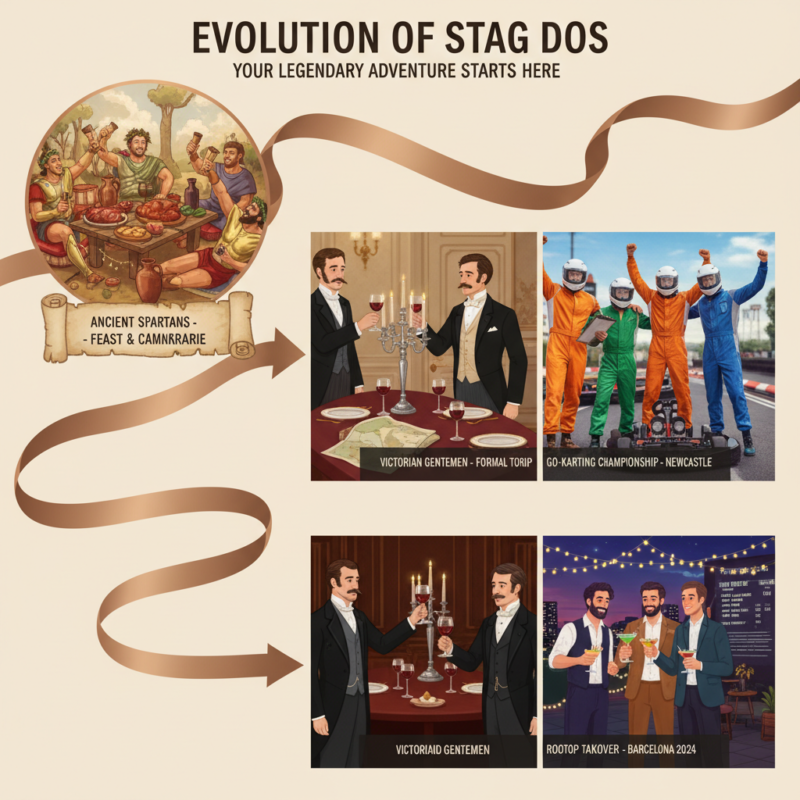
If you think your best mate’s stag do is going to be intense, be glad you weren’t a Spartan in the 5th century BC. Most historians agree that the earliest form of the stag party originated in ancient Sparta.
The Spartans were famous for their military discipline and camaraderie, and the night before a wedding was no exception. The groom-to-be would gather with his military comrades for a solemn feast.
What happened at a Spartan “Stag”?
- The Toast: It was less about shots and more about heartfelt toasts to the groom’s future.
- Bonding: The focus was on reinforcing the bond between soldiers before one of them entered a new phase of life.
- Simplicity: No fancy costumes or inflatable props here—just good food, wine, and loyalty.
So, the next time you’re raising a glass to the groom, remember you’re continuing a tradition started by some of history’s toughest warriors!
The Victorian Era: The “Bachelor Dinner”
Fast forward a couple of thousand years to the Victorian era in Britain. By the late 19th century, the tradition had evolved into what was known as a “Bachelor Dinner.”
This was a strictly formal affair. The groom’s father or the groom himself would host a dinner for his male friends and relatives. It was a “gentleman’s” event, often black tie, where the group would enjoy a multi-course meal, cigars, and perhaps a few games of cards.
However, don’t let the stiff collars fool you. As the evening wore on and the port flowed, these dinners often descended into rowdy behaviour that would rival any modern night out in Newcastle.
Fun Fact: Why is it called a “Stag”?
The term “stag” likely comes from the animal kingdom. A stag is a male deer, often seen as a solitary, virile leader of the herd. In some pagan beliefs, the stag was also a symbol of masculinity and regeneration. In the UK, we use “Stag Do,” while our American cousins use “Bachelor Party” and the Australians go for “Buck’s Night.” Different names, same legendary concept!
The Mid-20th Century: The Rise of the Prank
By the mid-20th century, the formal dinners began to fade away, replaced by a night out at the local pub. This era saw the introduction of something every modern best man is familiar with: the prank.
The transition from “honouring the groom” to “humiliating the groom (with love)” really took off in the 60s and 70s. As wedding traditions became less rigid, the stag do became a chance for the groom’s friends to test his sense of humour one last time before the big day.
From tying the groom to a lamppost (a classic, though we don’t recommend it!) to dressing him in questionable attire, the focus shifted firmly towards fun, laughter, and making memories.
The 90s and 00s: The Weekend Warrior
The biggest shift in stag do culture happened in the late 90s and early 2000s. Thanks to cheap flights and the rise of European city breaks, the “Stag Night” officially became the “Stag Weekend.”
Why limit the fun to one evening when you can have a whole weekend away? Suddenly, destinations like Prague, Amsterdam, and Barcelona became hotspots for British groups.
The Modern Stag Do Checklist:
- Travel: Jumping on a plane to somewhere sunny or exciting.
- Activities: It wasn’t just about drinking anymore. Paintball, quad biking, and bubble football became staples.
- Themes: Matching t-shirts and fancy dress themes became the uniform of the weekend.
This era cemented the idea that a stag do is a mini-holiday—a chance for the whole group to escape the daily grind and bond over shared experiences.
The Present Day: Tailored, Unique, and Legendary
So, where are we now? The modern stag do has evolved again. While the classic pub crawl is still a favourite, today’s groups are looking for something more unique and tailored.
It’s no longer one-size-fits-all. We’re seeing a rise in:
- Adventure Stags: White-water rafting, canyoning, and survival weekends.
- VIP Experiences: Private boat parties, luxury villas, and exclusive club entries.
- Chill Stags: Golf weekends, whisky tastings, and food tours.
The focus today is on quality e hassle-free planning. Best men want to organise a seamless weekend that the groom will actually enjoy, rather than just survive. It’s about creating a legendary story that doesn’t necessarily involve waking up in a hedge (unless that’s what you’re into!).
From Sparta to Spain: The Spirit Remains
While the activities have changed from Spartan feasts to go-karting grand prix, the core spirit of the stag do remains exactly the same. It’s about male bonding, celebrating friendship, and marking a significant milestone in a man’s life.
Whether you’re planning a quiet dinner or an epic three-day extravaganza in Ibiza, you’re taking part in a tradition that has stood the test of time.
Ready to Write Your Own History?
Now that you know the history of stag dos, it’s time to plan the future! At The Stag Do Ideas, we specialise in creating modern, legendary weekends tailored to your group.
From adrenaline-pumping activities to VIP nightlife, we have everything you need to give the groom the send-off he deserves. Don’t stress about the details—let us handle the logistics while you focus on the fun.
Browse our hassle-free stag do packages today and start planning a weekend for the history of stag dos books!
