

Blog
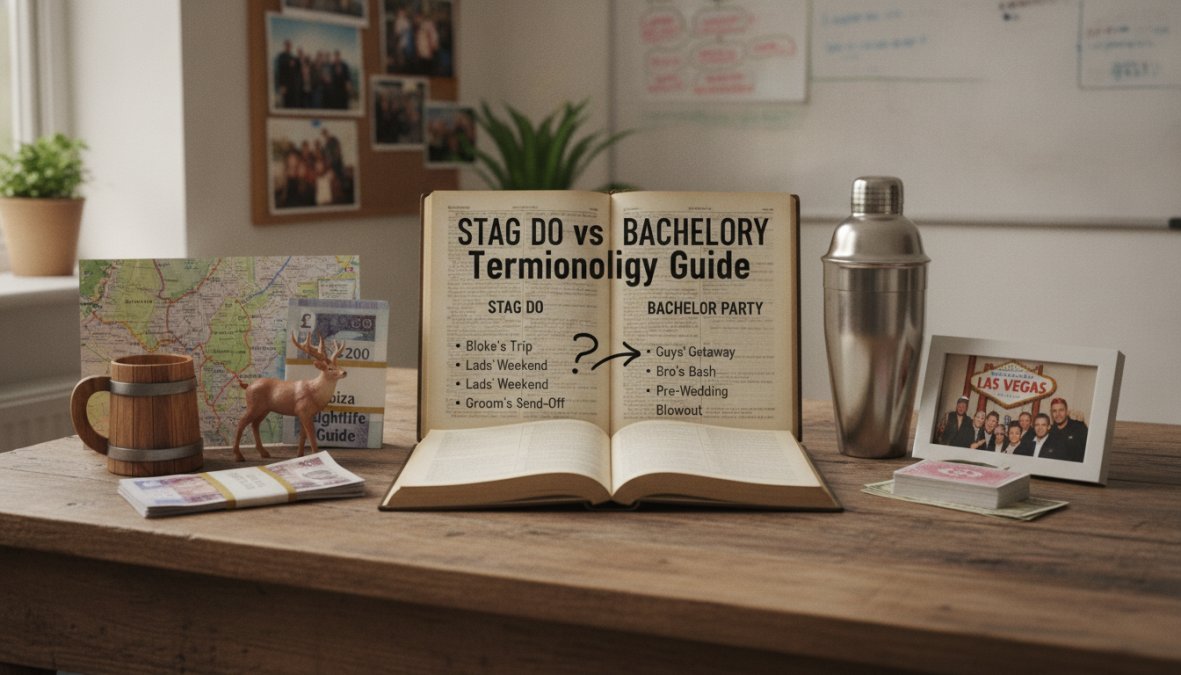
Stag Do vs Bachelor Party: Terminology Guide
Indice dei contenuti
- Stag Do vs Bachelor Party: Core Terminology Differences
- Regional Variations: How Different Countries Name the Event
- Origin and History: Why It’s Called a Stag Party
- What Does Bucks Night Mean in Modern Context?
- How Long Should a Stag Do Last? Planning Duration
- Bachelor Party Planning Checklist: Essential Steps
- Modern Inclusive Terminology and Same-Sex Celebrations
- Stag Do vs Bachelor Party: Legal and Financial Considerations
Last Updated: July 8, 2026
Quick answer
Stag Do vs Bachelor Party: Terminology Guide in short: activities from 35€ per person, groups from 8 people, and a full weekend planned for you with one contact, one itinerary and one invoice. Send your dates and group size and we come back with availability and a group price.
Understanding the difference between stag do vs bachelor party terminology matters when planning an international celebration. While these terms are often used interchangeably, they carry distinct regional meanings reflecting cultural traditions and geographic preferences. At Idee per l'addio al celibato, we help groups plan unforgettable pre-wedding celebrations across top destinations like Barcelona and Ibiza. Below, we’ll break down exactly what separates these terms, why the differences exist, and how to navigate planning across different regions.
Stag Do vs Bachelor Party: Core Terminology Differences
A addio al celibato is a pre-wedding celebration traditionally held for the groom in the United States, Canada, and increasingly in other English-speaking countries. It typically involves the groom’s closest friends gathering for a night or weekend of entertainment, often featuring nightlife, sports activities, or destination travel.
A addio al celibato (or stag party, stag night, or stag weekend) is the British and Commonwealth equivalent of a bachelor party. The terminology is particularly common in the United Kingdom, Ireland, Australia, and New Zealand. The event serves the same social function, celebrating the groom before his wedding, but the regional naming convention reflects cultural and linguistic preferences in those countries.
The core distinction isn’t about what happens at the event, but rather where you are geographically and which English-speaking tradition you’re following. Both celebrations mark a significant life transition and typically involve the groom’s inner circle.
When booking activities or venues internationally, use the local terminology. UK and Commonwealth vendors expect “stag do” or “stag party,” while US and Canadian organizers will recognize “bachelor party” immediately. This small detail prevents miscommunication and shows respect for local conventions.
What Is a Bachelor Party?
The bachelor party originated in the United States during the 19th century as a formal farewell celebration for unmarried men. Modern bachelor parties typically last one night to a full weekend and can range from casual dinners to elaborate destination trips. The groom’s best man traditionally organizes the event, though contemporary celebrations often involve multiple friends sharing planning responsibilities.
Common activities include bar crawls, nightclub visits, sports outings, adventure activities like go-kart racing or paintball, and themed costume events. Destination bachelor parties have grown significantly in popularity, with groups traveling to cities specifically known for nightlife and entertainment. The bachelor party culture in North America emphasizes spontaneity and often features adult-oriented entertainment.
The financial investment varies considerably. Some groups spend modestly on a single night out locally, while destination bachelor parties can involve flights, accommodation, and multiple paid activities spanning several days. The Stag Do Ideas specializes in curating activities for destination celebrations, offering everything from jetskiing and paddle surfing to boat parties and nightlife experiences.
What Is a Stag Do?
The stag do is the British and Commonwealth term for what Americans call a bachelor party. The event serves identical social functions, celebrating the groom’s final days of bachelorhood, but carries distinct cultural characteristics shaped by UK and Irish traditions. A stag do can last anywhere from a single evening to a full weekend.
In the United Kingdom and Ireland, stag dos often feature pub crawls, brewery visits, and nightlife in major cities like London, Dublin, and Manchester. Modern stag dos increasingly incorporate adventure activities, weekend trips to European destinations, and themed celebrations. The emphasis remains on camaraderie and memorable experiences.
The term "stag" historically referred to an unmarried man, and the celebration marked his transition to married life. The tradition became formalized during the Victorian era and has remained central to British wedding culture. Unlike some North American bachelor parties, UK stag dos traditionally maintain a more organized structure, with itineraries planned in advance and venues booked ahead of time.
Commonwealth countries including Australia, New Zealand, and South Africa have adopted the "stag do" terminology and similar celebration formats. Each region has developed its own cultural variations. Australian stag dos often incorporate outdoor adventure activities reflecting the country’s landscape, while New Zealand celebrations frequently feature extreme sports like bungee jumping or adventure tourism.
Regional Variations: How Different Countries Name the Event

The terminology used for pre-wedding groom celebrations varies significantly across English-speaking countries, reflecting linguistic traditions and cultural preferences.
United Kingdom and Commonwealth Countries
In the United Kingdom, "stag do," "stag party," and "stag night" are the standard terms. Ireland uses identical terminology. Australia and New Zealand predominantly use "stag do" or "stag party," though some younger groups occasionally use "buck’s night." South Africa and other Commonwealth nations follow similar naming conventions.
UK stag dos typically involve pub crawls through city centers, visits to specific venues known for group celebrations, and increasingly, weekend trips to European destinations. The tradition emphasizes organized planning, with itineraries often coordinated weeks in advance.
United States and Canada
The United States almost exclusively uses "bachelor party" terminology. This reflects both linguistic divergence from British English and the development of distinct American wedding traditions. Canadian usage varies by region, with English-speaking Canada generally following American conventions.
American bachelor parties tend to emphasize spontaneity compared to their UK counterparts. The bachelor party has become a significant commercial enterprise in the United States, with specialized companies offering packages for destination celebrations in cities like Las Vegas, Miami, and New Orleans.
Australia and New Zealand
Australia and New Zealand primarily use "stag do" or "stag party," though "buck’s night" has gained some traction among younger groups. The Australian stag do tradition emphasizes outdoor activities and adventure experiences reflecting the country’s landscape. Activities commonly include surfing trips, adventure sports, and camping experiences alongside traditional nightlife celebrations.
New Zealand stag dos similarly incorporate adventure tourism, bungee jumping, and white-water rafting. Many celebrations combine urban nightlife with outdoor adventure experiences in regional areas.
The Buffalo, NY Anomaly
Buffalo, New York presents a unique case in stag party terminology. Historically, "stag party" in Buffalo referred to a specific type of fundraising event organized by fraternal organizations or charitable institutions. This usage differs fundamentally from the modern bachelor party tradition. The terminology persists in Buffalo’s local culture, though the practice has declined significantly in recent decades.
Origin and History: Why It’s Called a Stag Party
The term "stag" originally referred to a male deer, a creature traditionally associated with virility and independence. By extension, the term came to describe an unmarried man, particularly in British English.
The formal "stag party" tradition emerged during the Victorian era in Britain, roughly the mid-to-late 19th century. As industrialization transformed British society, the tradition of formal pre-wedding celebrations became more structured and widespread. British soldiers and colonial administrators spread the stag party tradition throughout the British Empire, establishing the terminology in India, Australia, New Zealand, South Africa, and other Commonwealth territories.
The American bachelor party tradition developed somewhat independently. While influenced by British customs, American celebrations evolved distinct characteristics reflecting American culture’s emphasis on informality and entertainment innovation. The bachelor party became increasingly commercialized in 20th-century America, with dedicated venues and services developing around the tradition.
What Does Bucks Night Mean in Modern Context?
Buck’s night is an alternative term for a stag do or bachelor party, primarily used in Australia and New Zealand. The term "buck" is an informal reference to an unmarried man. However, "buck’s night" terminology is less common than "stag do" in modern usage, even in Australia and New Zealand.
The term appears to have emerged in Australian and New Zealand English during the 20th century as a colloquial alternative to the more formal "stag do." Younger Australians and New Zealanders increasingly prefer "stag do" or simply "stag party." Modern event planning companies, venues, and tourism organizations predominantly use "stag do" terminology.
Using “buck’s night” in modern Australia or New Zealand may confuse younger event planners and venue staff unfamiliar with the older terminology. Always lead with “stag do” when booking activities or venues.
How Long Should a Stag Do Last? Planning Duration
The ideal duration for a stag do depends on budget, guest availability, destination location, and the groom’s preferences. Most stag dos fall into three categories: single-night celebrations, weekend trips, and extended multi-day destinations.
Single-night celebrations typically last 6-12 hours, starting in the evening and concluding late at night. These events work well for local celebrations where guests travel minimal distances. This format requires minimal planning and accommodation logistics.
Weekend stag dos span Friday evening through Sunday morning, offering 2-3 days of celebration. This duration allows for multiple activities, accommodation stays, and a more relaxed pace. Weekend celebrations work well for destination trips where travel time justifies a longer stay.
Extended multi-day stag dos last 4-7 days, typically combining a weekend with additional vacation time. These celebrations are increasingly popular for destination trips to cities like Barcelona, Ibiza, Prague, or Amsterdam. Research suggests that 3-4 days represents the optimal duration for most groups, long enough to justify travel and accommodation costs while remaining manageable for most guests’ work schedules and budgets.
| Durata | Typical Format | Best For | Accommodation Needs |
|---|---|---|---|
| Single night | Evening through early morning | Local celebrations, tight budgets | None (local) or 1 night |
| Weekend (2-3 days) | Friday evening through Sunday morning | Destination trips, moderate budgets | 2 nights accommodation |
| Extended (4-7 days) | Multi-day vacation | Destination holidays, larger budgets | 3-6 nights accommodation |
Bachelor Party Planning Checklist: Essential Steps
Planning a successful bachelor party requires coordination across multiple areas including guest communication, activity booking, accommodation, budget management, and timeline management.
4-8 weeks before the event:
- Confirm the groom’s availability and preferred dates
- Establish a budget range and discuss cost-sharing expectations
- Create a guest list and gather contact information
- Research destination options if planning a trip away from home
2-4 weeks before the event:
- Book accommodation if required
- Reserve primary activities and entertainment
- Send formal invitations with date, location, and preliminary itinerary
- Collect RSVPs and dietary restrictions
- Book transportation if needed
1-2 weeks before the event:
- Confirm all reservations and activity bookings
- Finalize the detailed itinerary and share with all attendees
- Collect final payments and confirm attendance numbers with vendors
- Arrange any special surprises or themed elements
Final week:
- Send reminder communications with final itinerary and logistics
- Confirm all vendor attendance and reservation details
- Prepare contingency plans for weather or unexpected changes
The most important planning step is establishing clear communication with all attendees early. Collecting RSVPs, preferences, and budget expectations in the first 2-3 weeks prevents last-minute surprises and ensures everyone feels included.
Modern Inclusive Terminology and Same-Sex Celebrations
Traditional stag do vs bachelor party terminology assumes a male groom and male-only celebration. However, modern weddings increasingly feature same-sex couples, non-binary individuals, and mixed-gender celebrations that don’t fit traditional naming conventions.
For same-sex male couples, the traditional "stag do" or "bachelor party" terminology applies directly. For same-sex female couples, the traditional "hen party" or "bachelorette party" terminology applies. However, some couples prefer gender-neutral language, particularly if attendees include non-binary individuals.
Gender-neutral terminology options include:
- Pre-wedding celebration
- Pre-wedding party
- Bachelor/bachelorette celebration (using both terms)
- Stag and doe party (Canadian mixed-gender tradition)
- Simply the couple’s names: "Jamie and Alex’s Pre-Wedding Party"
When planning a celebration for a same-sex couple or non-binary individual, the most important step is asking directly what terminology they prefer. This simple question prevents assumptions and ensures that the celebration reflects the couple’s values and identity.
Stag Do vs Bachelor Party: Legal and Financial Considerations
While stag do vs bachelor party terminology primarily reflects geographic and cultural preferences, there are some legal and financial implications worth understanding, particularly for international celebrations.
Liability and insurance considerations differ by jurisdiction. In the United States, venues hosting bachelor parties typically carry liability insurance. However, organizers coordinating off-premises activities should verify that activity providers carry appropriate insurance. The Stag Do Ideas ensures all activities include proper insurance coverage and safety protocols.
International travel regulations affect destination celebrations. Groups traveling internationally should verify passport validity, visa requirements, and travel insurance coverage. Some adventure activities may have age restrictions or require waivers that vary by country.
Alcohol service regulations vary significantly by country. The legal drinking age differs globally: 21 in the United States, 18 in the United Kingdom, Australia, and many European countries. Organizers should ensure all attendees meet the legal drinking age for their destination.
Financial responsibility and payment collection can create complications if not handled clearly. Establishing transparent accounting prevents disputes. Clear communication about what costs are included versus what attendees pay separately prevents misunderstandings.
Never assume attendees understand the financial expectations. Send a written breakdown showing total costs per person, what’s included, what’s optional, and payment deadlines. This single step prevents the majority of pre-event conflicts.
Planning a stag do or bachelor party involves more than understanding terminology, it requires coordinating activities, managing budgets, and ensuring all attendees have a memorable experience. Whether you’re organizing a local celebration or international destination trip, clarity around terminology, expectations, and logistics sets the foundation for success. The Stag Do Ideas specializes in curating exciting activities and seamless experiences for destination celebrations in Barcelona, Ibiza, and other premier locations. Cliccate su di me! to explore our curated selection of activities and party packages designed for unforgettable stag dos.
Domande frequenti
What is the difference between a stag do and a bachelor party?
The primary difference lies in terminology and regional usage. A stag do (or stag party) is the traditional term used in the United Kingdom, Ireland, and Commonwealth countries like Australia and Canada. A bachelor party is the standard term in the United States. Both refer to the same event: a pre-wedding celebration for the groom with his groomsmen and friends. The terms are often used interchangeably in modern contexts, though regional preferences persist. Some regions also use alternative names like bucks night or bucks do.
Why is it called a stag do in the UK?
The term 'stag' has historical roots dating back centuries. Traditionally, 'stag' referred to a male deer and was used metaphorically to describe a single man or bachelor. The practice of celebrating a groom's final days of bachelorhood with male companions became known as a 'stag party' or 'stag do' in British English. The 'do' is British slang for a social event or party. This terminology became standard across the United Kingdom and later spread to Commonwealth nations, where it remains the predominant term for pre-wedding male celebrations.
What does bucks night meaning refer to, and where is it used?
Bucks night (or bucks do) is an alternative term for a bachelor party or stag do, primarily used in Australia and New Zealand. The term 'bucks' is slang for bachelor or single man, making 'bucks night' literally a bachelor's night of celebration. This terminology is deeply embedded in Australian wedding culture and is often used interchangeably with stag party. Some regions also use 'buck's party' or 'buck's do.' The term carries the same meaning and purpose as stag do and bachelor party but reflects the unique linguistic preferences of Oceania.
How long should a stag do last, and what factors influence duration?
Stag do duration varies widely based on location, budget, and group preferences. Single-day events typically last 8-12 hours, while stag weekends span 2-4 days, often in destination cities like Barcelona or Ibiza. International stag dos may extend 5-7 days. Key factors influencing duration include travel distance, guest availability, budget constraints, and the groom's preferences. Destination stag parties tend to be longer to justify travel costs. Consider group schedules, work commitments, and recovery time when planning. The Stag Do Ideas offers curated activities and packages designed to fit various timeframes and destinations.
This article was written using GrandRanker
Related stag do guides
